
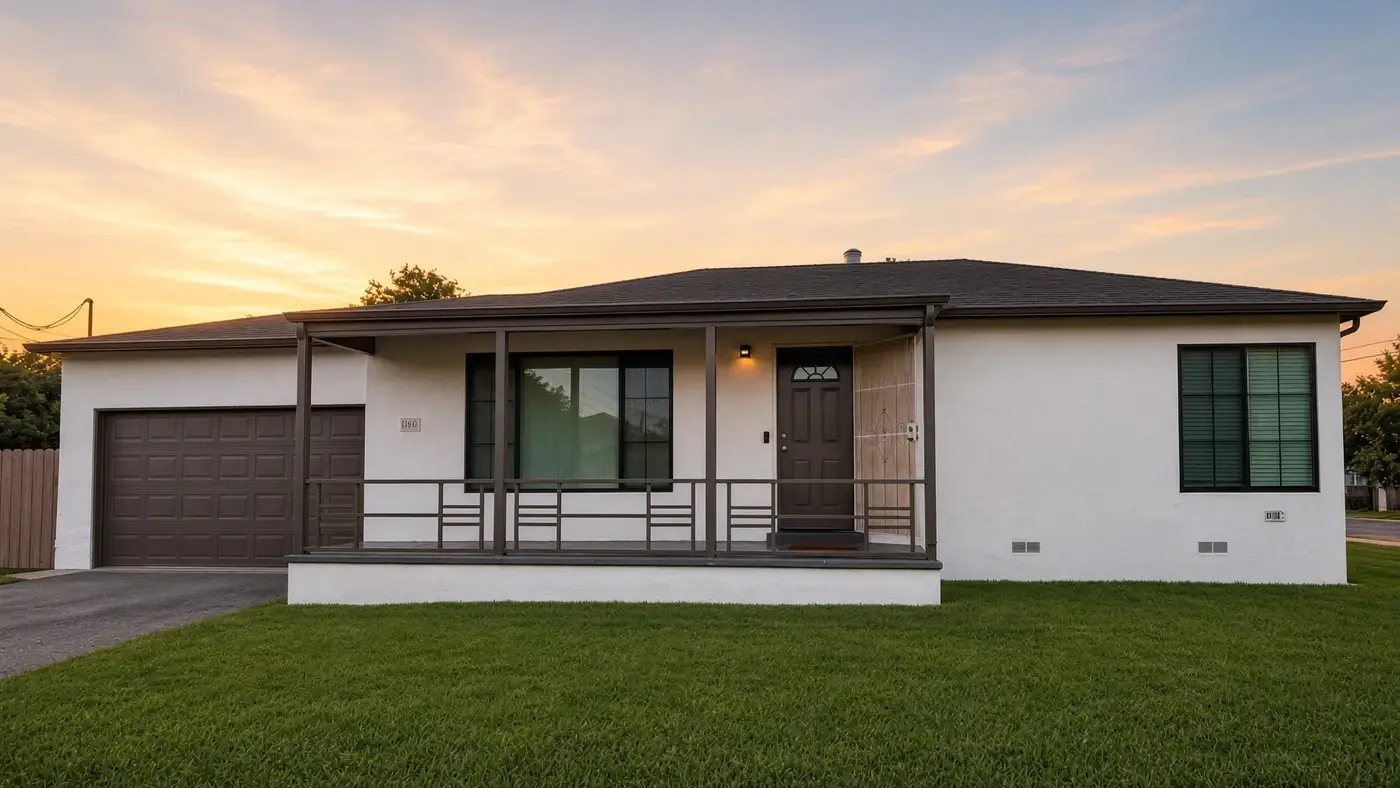
When your Sunnyvale home is telling you it's time
Paint does more than look good — it seals the surface underneath against moisture and sun. When it starts to fail, the signs are hard to miss. Keep an eye out for:
- Peeling or bubbling paint — a sign that moisture has gotten behind the film and is pushing it off the surface.
- Chalking or fading — the pigment breaks down from UV exposure, leaving a powdery residue and a dull, washed-out color.
- Cracking or checking — small lines that run along the surface, especially on older stucco or wood trim, that let water in over time.
- Visible bare wood or exposed stucco — once the paint is gone, the substrate is unprotected and damage accelerates quickly.
- A repaint that is simply overdue — if you cannot remember the last time the house was painted, it probably needs it.
Any one of these is a good reason to get a fresh look at the exterior before a cosmetic problem turns into a structural one.
Why prep work determines how long an exterior repaint lasts
The condition of an exterior paint job comes down almost entirely to what happens before the first finish coat goes on. Surfaces need to be clean, stable, and sealed for paint to bond properly and hold up over time. Skipping steps in prep is the most common reason a repaint looks fine at first and then fails early.
Stucco is one of the most common exterior surfaces across the South Bay. It holds paint well when properly prepared — cracks filled, surface washed and primed — but skipped prep on stucco shows up fast, usually as bubbling or peeling within a year or two.
Shortcuts that come back to bite homeowners
Exterior painting is one of those jobs where the visible result — a freshly painted house — can look fine for a few months even when the prep was poor. The problems show up later, and by then the contractor is long gone. Here are the shortcuts most worth avoiding:
- Skipping the power wash — dirt, chalk, and mildew on the surface prevent paint from bonding properly. No wash means early failure.
- Painting over peeling areas without scraping and sanding — new paint applied over loose old paint peels with it.
- Skipping primer on bare spots — primer seals the surface and gives the finish coat something to grip. Bare stucco or wood painted without primer absorbs unevenly and may peel.
- One coat instead of two — a single finish coat leaves thin coverage, uneven color, and a surface that wears out sooner.
- Not caulking gaps and cracks first — unsealed gaps allow water and air movement that lift paint from the inside out.
- Using interior paint outside — interior formulations are not built to handle UV, moisture cycles, or temperature extremes.
From first call to finished job: what to expect
Knowing what a professional process looks like makes it easier to compare whoever you are considering. With American Paint Finishes, the process starts with a free estimate — Christian comes out, looks at the surfaces, talks through color and finish options, and gives you a clear written price before any work begins.
On the job itself, every American Paint Finishes exterior follows the same checklist every time: surfaces are power-washed and allowed to dry, loose paint is scraped and sanded, cracks are filled and caulked, bare areas are primed, and then two finish coats are applied. At the end, lines are checked and touched up, and the property is left clean.
Christian is easy to reach by call or text, seven days a week, 7 AM to 7 PM.
What drives the cost and timeline of an exterior repaint
No honest painter can quote a price without seeing the house, because the factors that drive cost vary too much. The main ones for a Sunnyvale exterior repaint include:
- Surface area and stories — a two-story home takes more time and equipment to reach safely than a single-story.
- Surface condition — a house with heavy peeling, cracks, or damaged stucco needs more prep work, which takes more time.
- Number of colors and surfaces — body, trim, eaves, and railings each in different colors add time to cut clean lines.
- Paint quality chosen — higher-quality paints cost more per gallon but typically last longer.
- Access — tight side yards, tall eaves, or complex rooflines add time.
The best way to know the real number for your home is to get a free estimate. American Paint Finishes offers free, no-obligation estimates — call or text to set one up.
Ready to get started in Sunnyvale?
American Paint Finishes is an owner-run painting company based in San Jose, serving Sunnyvale and the South Bay. Christian handles every job personally — from the estimate and color conversation to the final walkthrough. His license is verified on Yelp, and you can look it up before you call.
To get a free estimate for your Sunnyvale exterior, call or text (408) 709-0718, seven days a week from 7 AM to 7 PM. You can also send a request online and Christian will get back to you fast.
Frequently asked questions
Does American Paint Finishes serve Sunnyvale, or just San Jose?
American Paint Finishes serves Sunnyvale and the broader South Bay, in addition to San Jose. Call or text (408) 709-0718 to confirm availability for your address and to schedule a free estimate.
How long does an exterior repaint take from start to finish?
Timeline depends on the size of the home, the condition of the existing paint, and the number of surfaces being painted. Christian can give you a realistic schedule when he sees the job during the free estimate.
Do you paint stucco homes?
Yes. Stucco is one of the most common exterior surfaces in Sunnyvale and across the South Bay, and American Paint Finishes handles full exterior repaints on stucco homes, including crack filling, caulking, and priming before the finish coats go on.
What is included in the free estimate?
Christian comes out, looks at the surfaces, talks through your color and finish preferences, and gives you a clear written price before any work starts. There is no obligation to book.
How do I know when my Sunnyvale home actually needs repainting versus just a touch-up?
If the paint is peeling, chalking, cracking, or showing bare spots in multiple areas, a full repaint is usually more cost-effective than spot touch-ups, which rarely match the aged surrounding paint. If you are unsure, a free estimate is a good way to get an honest assessment.