
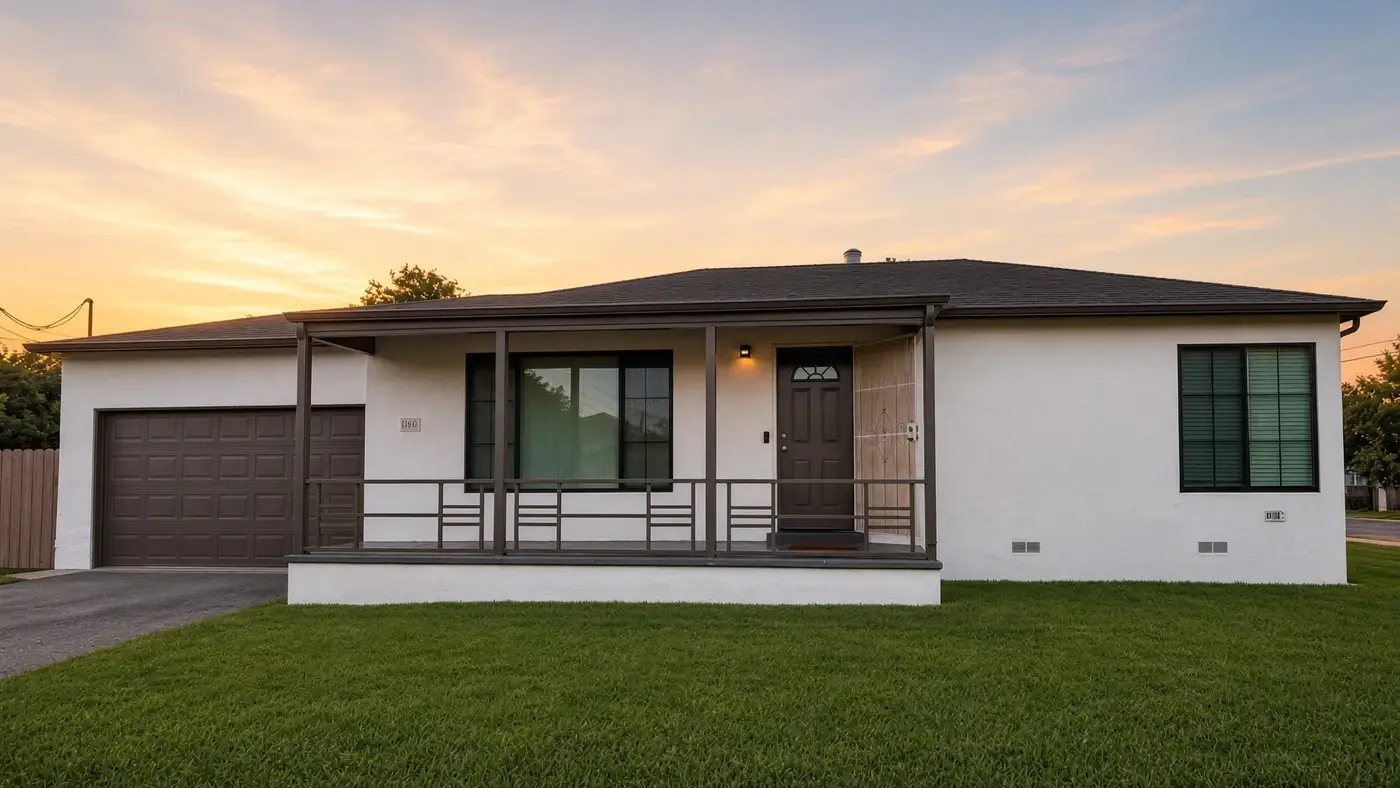
Surface Type: Stucco vs. Siding vs. Wood
The material covering your home's exterior has one of the biggest effects on what a paint job will cost. Here's why each type behaves differently:
- Stucco is common throughout San Jose and the South Bay. It is porous, so it soaks up more paint than smooth surfaces. Cracks and chips also need to be filled before painting, which adds prep time.
- Wood siding tends to weather, warp, and peel more than other materials. Peeling paint must be fully scraped off and bare wood may need a stain-blocking primer before finish coats can go on. That extra labor drives cost up.
- Smooth fiber-cement or engineered siding generally requires less prep and holds paint well, so the process can be more straightforward.
- Trim, eaves, railings, and porches each add to the total scope. Detailed trim work takes more time per linear foot than a flat wall, so a home with heavy architectural detail costs more to paint than a plain box of the same square footage.
Square Footage and Stories
Larger homes simply take more paint and more labor hours, so total square footage is a primary cost driver. But it is not just about floor space—the number of stories matters too. Painting a two- or three-story home requires ladders, scaffolding, or an extension setup to reach high peaks and eaves safely. That equipment, and the extra time it takes to work at height, adds to the job cost compared with a single-story home of similar square footage.
When estimating the paintable surface area, painters typically measure the actual wall surface—not the interior square footage you see on a listing. These numbers can differ significantly depending on ceiling height and how open or boxy the floor plan is.
Prep Work: The Biggest Variable Most Homeowners Miss
Thorough preparation is what separates a paint job that lasts from one that starts peeling within a year or two. The condition of your home going into the project has a direct effect on how much prep time is needed—and therefore on cost.
Common prep steps for a full exterior repaint include:
- Power washing to remove dirt, mildew, and chalky old paint
- Scraping peeling or flaking areas down to a stable surface
- Sanding rough or splintered wood smooth
- Filling cracks and gaps in stucco or wood, then caulking joints around windows, doors, and trim
- Priming bare or problem areas so finish coats bond properly
A home that has been well maintained and painted recently may need only a wash and light caulking. A home that has not been painted in many years, or one with significant cracking, water staining, or peeling, will need far more prep. Getting this step right is not optional—skipping it shortens the life of any paint job regardless of how much you spend on the paint itself.
Number of Colors and Complexity
A single body color with one trim color is straightforward. Add a third or fourth color—say, a contrasting front door, shutters, or decorative fascia—and each color requires careful cutting-in and masking to keep clean lines. That takes more time. The more complex the color scheme, the more labor is involved, and the higher the cost.
Architectural details like arched windows, decorative corbels, or ornate railings also increase painting time because there are more edges to cut and surfaces to work around carefully.
Paint Quality and Quantity
Not all exterior paints are equal. Higher-quality paints contain more pigment and binders, which means better coverage, richer color, and longer life between repaints. They cost more per gallon, but they typically require fewer coats and hold up better against sun, rain, and temperature swings.
A professional painter will usually recommend a primer coat on bare or problem areas plus two finish coats on the full surface. That approach uses more material but produces a more durable result than a single thick coat. The brand and product line chosen will affect both material cost and how the finished job holds up over time.
Access and Landscaping
How easy it is to reach your home's surfaces affects labor time more than most homeowners realize. Dense shrubs or hedges right against the house have to be carefully worked around or temporarily tied back. A sloped yard makes ladder placement trickier and slower. Tight side yards between homes can limit how equipment is moved into position. None of these things make a job impossible, but they do affect how long it takes.
Quick Comparison: Factors That Push Cost Up or Down
| Factor | Lower cost | Higher cost |
|---|---|---|
| Surface type | Smooth, stable siding | Cracked stucco or peeling wood |
| Stories | Single-story home | Two or three stories |
| Prep condition | Recently painted, good condition | Heavy peeling, cracks, or mildew |
| Color scheme | One body, one trim color | Three or more colors, complex detail |
| Paint quality | Standard exterior paint | Premium paint with longer lifespan |
| Site access | Open yard, easy ladder placement | Overgrown beds, slope, tight access |
What You Can Do Before Getting a Quote
A little preparation on your end makes the estimate conversation faster and more useful:
- Walk the perimeter and note any obvious cracks, peeling spots, or rotted wood
- Have a rough idea of how many colors you want—body, trim, doors, and accents
- Think about whether you want to match the existing color or go in a new direction
- Note any areas that are hard to reach, like high peaks or tight side yards
When to Call a Professional
Exterior painting is one of those projects where the quality of the prep and application directly determines how long the results last. If your home has significant peeling, stucco cracking, or wood deterioration, cutting corners on prep to save money upfront usually costs more in the long run. Christian will assess the full condition of the surface, explain what prep is needed, and give you a clear written price before anything starts.
American Paint Finishes serves San Jose and the South Bay. Call or text (408) 709-0718 any day of the week, 7 AM to 7 PM, for a free estimate.
Frequently asked questions
How is the cost of an exterior paint job calculated?
Painters typically consider the paintable surface area, the number of stories, the condition of the existing surface, the complexity of the color scheme, and the quality of paint specified. All of these factors combine to determine how many hours the job will take and how much material it will require.
Does stucco cost more to paint than wood siding?
Stucco is porous and absorbs more paint, and cracks often need to be filled before painting begins. Wood siding that is peeling or weathered requires scraping and priming. Both can add to cost depending on condition, so the state of the surface matters as much as the material type.
How many coats of paint does an exterior repaint need?
A professionally done exterior repaint typically includes a primer coat on bare or problem areas and two full finish coats over the entire surface. This approach uses more material but produces a more durable result that lasts longer between repaints.
Does the number of colors affect what I pay?
Yes. Each additional color requires separate masking and careful cutting-in to keep clean lines between surfaces. A three- or four-color scheme takes meaningfully more time than a simple body-and-trim combination, which is reflected in the overall cost.
How do I get an accurate price for my home?
The most reliable way is to have a painter walk the job in person. They can assess the surface condition, measure the actual paintable area, and discuss your color goals before giving you a written quote. American Paint Finishes offers free estimates—call or text (408) 709-0718 any day, 7 AM to 7 PM.